

Dentures – Rockwall, TX
Regain a Complete, Reliable Smile
Are missing teeth holding you back in life? Tooth loss can have a significant impact on your ability to chew comfortably, speak clearly, and smile confidently. What’s more, missing several or all your teeth can increase your risk of tooth decay, oral infections, gum disease, and many other issues. At Spillman Family Dental of Rockwall, we can help you regain a complete, reliable smile with custom-made dentures!
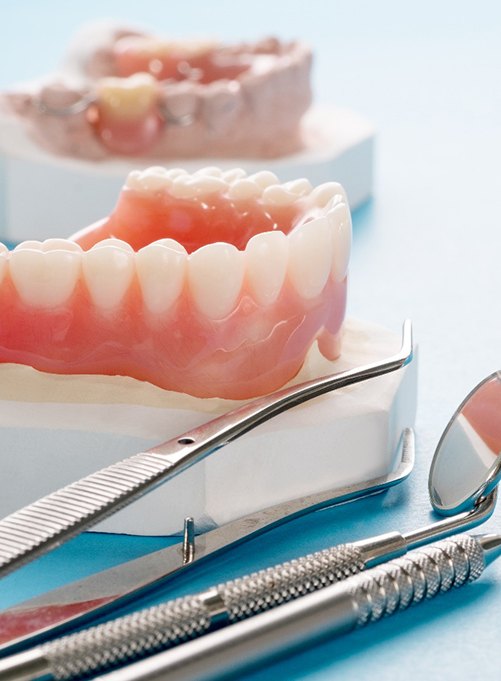
Why Choose Spillman Family Dental of Rockwall For Dentures?
- Precise Custom Restorations for Reliable Fit
- Experienced and Friendly Dental Team
- High Quality Materials for Lifelike & Lasting Results
What Types of Dentures Are There?
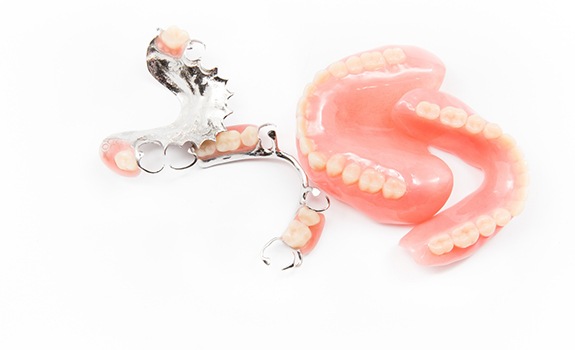
While dentures have been used for hundreds of years, modern restorations are more lifelike, comfortable, and reliable than ever before! Custom-made replacement teeth are crafted out of natural-looking materials and set into a gum-colored acrylic base. Depending on the extend of your tooth loss, we may recommend:
Partial Dentures
For patients who still have some remaining healthy teeth, a partial denture can be fitted between and around them like a puzzle piece. They’re held in place with small, discreet metal clasps wrapped around the natural tooth structure for seamless results.
Full Dentures
Patients who are missing an entire arch can replace all their teeth at once with a full denture. This precisely made complete set of pearly whites rests comfortably on top of your gums. Thanks to its custom fit, a strong natural suction is created to keep the restoration securely in place.
Implant-Retained Dentures
Alternatively, dental implants can be used to anchor a set of dentures into position. Implant-retained dentures gain their support from small titanium posts that are placed directly into the jawbone. This unique method provides vastly improved functionality, unmatched comfort, and can potentially last a lifetime!
Who’s a Good Candidate for Dentures?
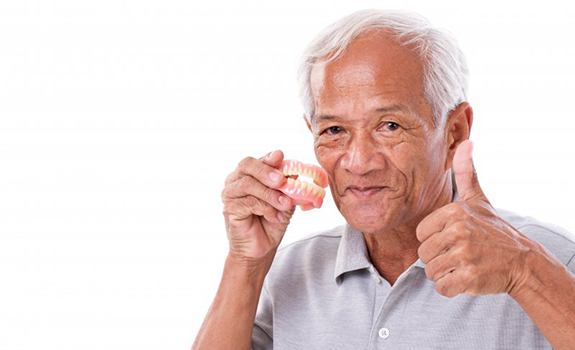
Whether you’ve lost one tooth or many, pretty much anyone can get dentures. These dental prosthetics don’t have strict requirements for use. Still, it’s best if you consult our dentists before you commit. They can examine your mouth and see if dentures suit you. Our team can even help if you don’t qualify at first. After all, you can become a good dentures candidate with preliminary dental work. You’re also free to explore our other restorative options. To learn more, keep reading or call us soon!
Effects of Missing Teeth
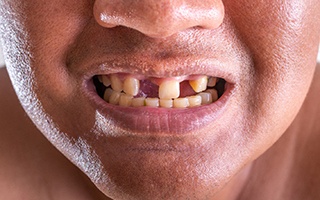
As you consider dentures, it’d help if you reviewed tooth loss’ causes and effects. Going over these facts will show how our prosthetic teeth benefit you.
For starters, people can lose teeth for varied reasons. Decay could make your chomper fall out or lead to an extraction. Meanwhile, someone else may get gum disease – an issue that’d loosen your teeth by eroding your gums. Yet another might have an accident or injury that knocks out their teeth.
In contrast, the effects of tooth loss are limited but harsh. The most notable one is how lacking teeth makes everyday life – eating, speaking, smiling, etc. – hard. Plus, the loss creates smile gaps that erode your jawbone. (This erosion will then trigger facial collapse if left unchecked.) Worse yet, those gaps in your grin can also tilt your other teeth until they fall out.
What Qualifies You for Dentures?
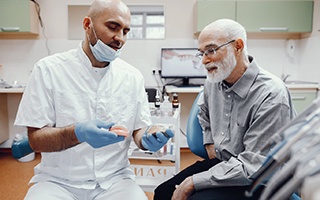
Most patients only need to suffer from tooth loss to qualify for dentures. Aside from that, these new teeth don’t have many prerequisites. Even so, you’d do well to note a few other things.
One such element is your general oral health. You see, dentures won’t work if your gums and jaws are very weak. Such problems mean you lack the strength to support prosthetics. That said, having sensitive or decayed teeth shouldn’t disqualify you. Dentures could replace such offending chompers.
How many teeth you’ve lost is also crucial. Based on the final number, you’ll qualify for one of two possible dentures. The first is the partial model that only replaces a few teeth. On the other hand, option two is a full denture – one that replaces all teeth along an arch.
Your finances are a relevant concern as well. In reality, dentures are often the cheapest tooth replacements. They’d likely be your best choice if you have limited funds.
Alternative Tooth-Replacement Options
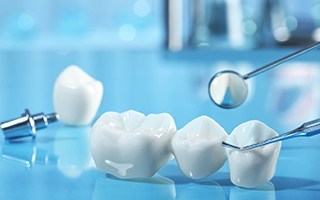
If our dentists conclude you don’t qualify for dentures, you shouldn’t worry. Our office has several ways to restore your smile. In fact, we offer two other tooth replacement services. These include:
- Dental Bridges – As a fixed restoration, a dental bridge is made of two crowns fused to a pontic. That means it’s cemented between nearby teeth, which then act as abutments (i.e., supports.) Placing this device requires that a dentist “prep” the abutments, removing bits of their enamel.
- Dental Implants – Dental implants are small metal posts set in your jaw. Being made of titanium, they fuse with your jawbone and become secure. They’re capped with dental crowns once placed, thus ensuring they blend with your smile. (Notably, implants can be costly; their unique traits make them an expensive option.)
How Dentures are Made
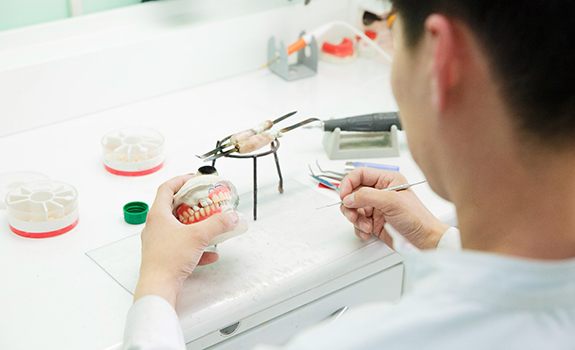
Often, patients like to learn how dentures are made before getting them. It’s a fair thought – knowing what went into your new teeth helps you value the prosthetics. That said, perhaps you aren’t sure where to find the relevant details. Our dental team would be happy to assist. Below, you’ll find a summary of how dental labs make dentures. Reading it should help you grasp the restorations better. If you’d like additional facts, feel free to call our office.
What are Dentures Made Of?
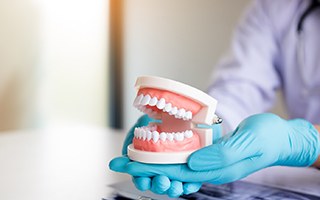
Whether partial or full, each denture has a base and artificial teeth. Those two parts form the entire restoration. As proof, consider their listed features:
- Denture Base – A denture’s base is the structure that supports its artificial teeth. Typically, it’s made of acrylic, nylon, resin, or metal. Acrylic is often used for full denture bases, as the plastic can match your gums. In contrast, partial dentures may rely on metal clips with an acrylic base.
- Artificial Teeth – The artificial teeth (per their name) are a denture’s tooth substitutes. They’re usually crafted from lifelike resin or porcelain. Notably, porcelain is more popular due to its toothlike looks.
The Denture Creation Process
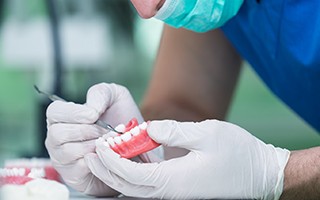
Every denture is custom-made for a patient's unique mouth. Given that fact, dentists must follow a multi-step process to make one. These steps are:
- Step 1: Our dentists will take a dental impression. From there, they’ll make a plaster model that matches the final denture’s size and shape.
- Step 2: Our office will send the plaster model to a lab. Next, lab workers will use it to create a wax gumline.
- Step 3: The lab will set artificial teeth in the wax base. Doing so leads to a prototype denture, which will be used to make the final one.
- Step 4: The wax denture will go to the dentist for a fitting. After testing, it’ll return to the dental lab to finish the final restorations.
- Step 5: A worker will boil the denture to remove its wax. They’ll then place it in a flask. This flask will receive plaster and sit in hot water.
- Step 6: A separator will go into the plaster layer, ensuring the acrylic doesn’t stick. This latter material will be injected into the flask to replace the wax.
- Step 7: The plaster will be removed to reveal the denture. Later, the restoration will be placed in a bath to remove residue.
- Step 8: Excess acrylic will be cut from the denture. Said denture will then be polished.
- Step 9: The patient will have the denture fitted. At that time, the dentist will adjust your denture to work smoothly.
Adjusting to Your New Dentures
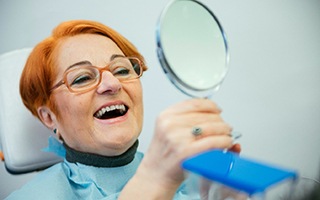
When you first start using dentures, your mouth may ache a bit. You could even feel sore and struggle to eat or speak. Still, note that these effects are typical. They’ll fade away quickly once you adjust to the dentures. Your new teeth will then feel like your other ones.
Of course, it’s possible to adjust faster. One way to do so is by exercising your facial muscles. Another method would be eating soft foods for a week. If you’re okay with it, you could even apply an adhesive to keep the dentures in place. These approaches would help your dentures feel familiar in less time.
If your discomfort persists, call our office. There’s a chance the denture itself needs adjustment.
The Benefits of Dentures
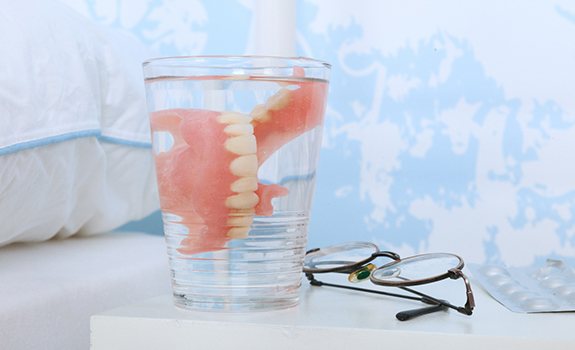
With missing teeth, it can be quite difficult to do various oral tasks that you used to be able to do before tooth loss. The good news is that you can regain the majority of your bite and smile by getting natural-looking dentures. These lifelike prosthetics can complete your grin while providing various advantages for your oral and overall health. Keep reading to learn some of the common benefits of dentures that you can expect to enjoy.
Psychological Benefits

Almost every person who’s lost one, some, or all of their teeth tends to experience reduced self-esteem afterward. Not only are they missing most of their smiles, but they also aren’t able to perform certain oral tasks like before, such as chewing effectively, speaking clearly, and smiling confidently. In some cases, they might not want to participate in social interactions due to their appearance. By getting custom dentures, you’ll be able to regain your full bite and feel much more comfortable showing off your brand-new pearly whites.
Clearer Enunciation

In order to enunciate certain sounds and words, we typically need to position our tongues and lips against our teeth to do so. However, if you’re missing some or all of your teeth, then this can make it more difficult to talk clearly. Since dentures replace the entire arch of teeth, you’ll be able to speak much clearer than before. This can take some time to get used to, but practice and repetition every day can take you very far.
Improves Nutrition

Many food options can be quite tough in texture, including lean meats, veggies, fruits, and even dairy products. Without all of your teeth, your bite might not be as strong as before, meaning you won’t be able to chew as efficiently. This can end up leading to issues like malnutrition and indigestion. By restoring the majority of your bite with dentures, you’ll be able to avoid these complications while also promoting better oral health due to the expanded dietary choices you’ll have.
Preserves Oral Health

Tooth loss can often lead to problems like jawbone deterioration and dental shifting, as you won’t have the proper tooth roots necessary to preserve a youthful and sturdy facial structure. Dentures, however, can serve as placeholders for your remaining pearly whites, preventing them from moving out of place to fill in gaps in your smile. Your prosthetics can even distribute the weight and pressure of chewing more evenly throughout your mouth, minimizing wear and tear on your enamel.
Expands Opportunities

Did you know that most people will notice your smile during a first meeting? This makes your teeth important when it comes to facing opportunities in both your social and professional life. If you’re missing some or all of them, then one of the most convenient ways for you to regain a full and confident bite is dentures.
Understanding the Cost of Dentures
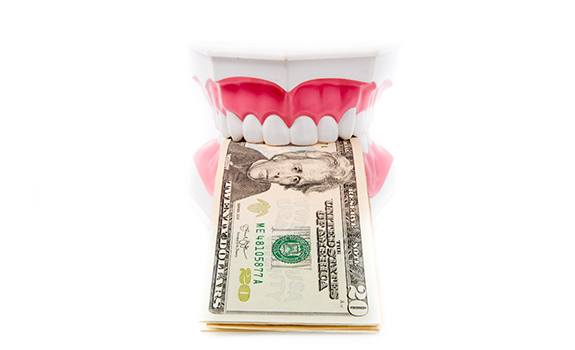
Whether you’re missing just a couple or an entire arch of teeth, your mouth is completely unique; as a result, what works for another patient may not work for you. There is no “typical” case, which is why we can’t provide a general quote for the typical cost of dentures. However, we share below what you can expect during our conversation about the cost of dentures, so you can come more prepared with questions about your case. Schedule your consultation with your denture dentist in Rockwall today!
Factors that Affect the Cost of Dentures
In order to determine the cost of your dentures, we need to answer the following questions:
- How many teeth are being replaced? The more teeth that need to be replaced, the higher the cost.
- Where are the missing teeth located in the mouth? For partials, the location of the missing teeth will affect what kind of clasps or attachments will be used.
- Does any preliminary work (e.g., tooth extraction, gum disease therapy, implant placement) need to be performed?
Once Dr. Spillman has had a chance to examine your mouth, he can put together a treatment plan customized to you, and we’ll be able to discuss specific numbers.
Are Implant Dentures More Expensive?
It depends on your outlook. In the short term, yes, implant dentures tend to cost more than traditional ones. Implant treatment involves surgically placing the post into the jawbone before having the restorations attached on top. However, when you have a more long-term approach, the benefits of implant dentures far outweigh the cost. In fact, you may even find that they save you money! After all, traditional dentures need to be adjusted frequently and substituted with a new one about every five to seven years. Implant dentures, on the other hand, can go for decades without replacement.
Does Dental Insurance Cover Dentures?
Generally, insurance companies do cover part of the cost of dentures in Rockwall. Keep in mind, however, that many dental insurance plans do not cover implant placement, only the restorations. We’ll be happy to look through the details of your plan to find ways to save you as much as possible on your traditional or implant dentures.
Other Options for Making Dentures Affordable
What if the out-of-pocket costs are too much for you to pay upfront? You don’t have to worry or postpone getting your replacement teeth because of money issues. We accept payment through CareCredit, a trusted third-party financier. CareCredit breaks up the total into easier monthly payments at a reasonable interest rate. If you qualify, you can even have 0 percent interest! Let us know if you are interested in applying for CareCredit, and we can help you through the process.
Dentures Aftercare

Even if you have replaced all of your teeth with dentures, you should still plan on visiting our office at least two times a year so that we can make sure that your mouth is still in good health. And of course, you need to give your dentures proper maintenance in order to keep them in good shape. Listed below are some crucial tips that can go a long way toward helping you take better care of your new dental prosthesis.
Remove After Eating

After you have finished enjoying a delicious meal with your dentures, you should make a quick stop at the nearest sink. Take your dentures out and give them a gentle rinse in order to get rid of any leftover food debris. When rinsing your dentures, make sure the water isn’t too hot, as high temperatures could cause the material to lose its shape.
Clean Your Restoration
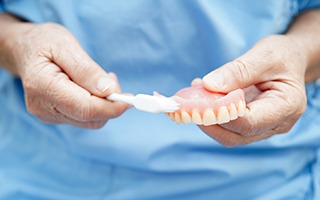
Rinsing your dentures after a meal is important, but it’s far from the only step you need to take to make sure that your dentures stay clean. At least once a day, you should give your dentures a careful brushing. It’s important to make sure you aren’t being too harsh on your prosthesis, so avoid using a toothbrush with hard bristles; always use a soft-bristled one instead. Additionally, it’s better to use hand or dish soap instead of toothpaste.
In addition to brushing your dentures, you can also put them in a cleansing solution. These steps can go a long way toward keeping your dentures free of bacteria that might cause problems for your mouth.
Keep Your Dentures Safe
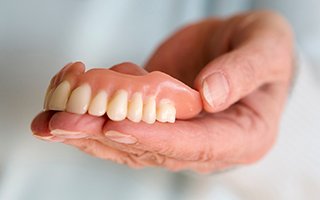
Accidents can happen when you least expect them to, which can result in your dentures getting broken and needing to be replaced prematurely. However, you can protect your prosthesis simply by taking some simple precautions. For example, you can put a towel under you whenever you remove your dentures, thus keeping them safe if you drop them. Additionally, you should be mindful of where you store your dentures when not wearing them; it’s best to keep them in a place that can’t be reached by children or pets.
Remove Dentures When You Sleep

It may seem easier to simply wear your dentures to bed, but that can lead to irritation of the gums, and it could even increase your chances of developing pneumonia. So when you’re getting ready to turn in for the night, you should take your dentures out first. Leave them in a special denture-soaking solution so that they don’t dry out.
Notice Changes

Over time, your dentures may not fit as well as they used to, or they may start to show signs of wear and tear. Keep an eye out for these types of changes; they typically indicate that you should call your dentist as soon as possible. Oftentimes, your dentures may need to be refitted or replaced in order to address the problem.
Dentures FAQs
Can I Get Dentures Right After Having My Teeth Pulled?
We will always do everything we can to preserve your natural teeth. However, if you have some teeth that are severely decayed or broken, it may be more cost-effective for you to have them extracted and replaced with a full or partial denture. In these cases, you’ll no doubt likely be anxious to get your new dentures right away. However, you will likely need to wait four to eight weeks after having your teeth extracted before we can begin fitting you for dentures. This should give your gums and mouth enough time to heal so we can take accurate impressions and make a set of dentures that fits snugly.
Can I Sleep with My Dentures?
When you first get your dentures, it will take some time for your mouth to adjust to them. In most cases, we tell patients to wear their new dentures for 24 hours a day during the first week to help speed that process along. After that however, you’ll need to take your dentures out every night before you go to bed. Overnight soaking is the best way to thoroughly clean your dentures and get rid of any plaque or bacteria that’s built up on them throughout the day. Plus, it will give your gums a chance to rest.
Am I Too Young for Dentures?
It’s no secret that tooth loss becomes more common with age. However, significant tooth loss can happen at any time of life for a variety of reasons! Thankfully, dentures are an excellent choice for adults of all ages who need to replace missing teeth. As long as your jawbone has stopped growing and you’ve lost several (or all) of your teeth, it’s likely that you can qualify as a good candidate for dentures.
Is Wearing Dentures Uncomfortable?
As we mentioned, there is an adjustment period once you begin wearing your dentures. Your gums will need time to get used to the presence of the denture base. It’s not uncommon to experience some slight irritation or soreness in the gums as the tissue adapts. Fortunately, these symptoms should be relatively mild and easy to manage with cool foods and drinks as well as over-the-counter pain relievers. If your discomfort does not ease within a week or seems to be getting worse, give us a call! We’ll take a look to see if there’s an underlying issue or if your dentures need to be readjusted.
Do dentures break easily?
While it’s true that dentures are durable enough to withstand the daily rigors of eating, speaking, and smiling, they weren’t designed to last forever. In most cases, traditional, removable dentures will last between five and seven years with proper care and hygiene.
Unfortunately, however, accidents do happen, and one of the most common reasons for broken dentures is dropping them while cleaning, inserting, or removing them. They can also break or fracture if they fit poorly or have tiny defects in their base such as scratches or notches.
However, be aware that even the most well cared for dentures will eventually get worn down from repeated use and stress. If you are interested in learning more about longer lasting, permanent dentures in Rockwall, speak to your dentist about implant-retained dentures that stay in place with dental implants.
What should I do if my dentures break?
The most serious complication patients face with full dentures is known as “prosthesis fracture”, which is the term used for when dentures break in half. Although this is more typical with top dentures, it can also occur with bottom dentures.
The type and cause of breakage will determine whether your denture can be repaired. If it is damaged, please call us as soon as possible. Depending on the extent of the damage, we may be able to repair it on the same office visit, or we may need to send it back to the dental lab or recommend a reline. You may also benefit from a complete replacement, or an upgrade to implant-retained permanent dentures in Rockwall.
Can I reline my dentures myself?
In recent years, social media videos have encouraged people to try do-it-yourself denture relining, often to disastrous results. The idea is that you can adjust your restorations at home to save money and ensure a better fit. In fact, some stores and online retailers have even begun selling DIY denture reline kits.
Unfortunately, however, it’s not a good idea to do this type of repair yourself. Only a trained dentist will have a qualified opinion about how to fix ill-fitting dentures, and if you’re not careful, DIY relining could leave your restorations fitting even worse than before!
When you reline your dentures yourself, you lack the necessary perspective because you won’t be able to see what you’re doing. DIY relining can also cause pain that makes it harder to chew, especially if you don’t have the right tools to do the job correctly.
What can’t you eat with dentures?
Although they can vastly expand your diet if you have significant tooth loss, there are still some foods you should avoid with dentures.
Sticky foods such as peanut butter and gummy candies can pull dentures out place, making them difficult to chew and causing gum irritation. Other foods that contain small pieces like popcorn kernels, shelled nuts, and sesame seeds are also known to get stuck in and around dentures, potentially damaging them.
Hard foods like apples, carrot sticks, and corn on the cob can damage or dislodge dentures. While these foods are still okay to eat occasionally, you should avoid them if possible.
Tough cuts of meat like steak and pork chops that require an excessive amount of chewing may also put stress on both your dentures and gums.
Implant-retained dentures are permanent dentures in Rockwall that are securely attached to the jawbone to vastly improve the amount of foods you can eat without causing damage or risking the denture slipping while eating!